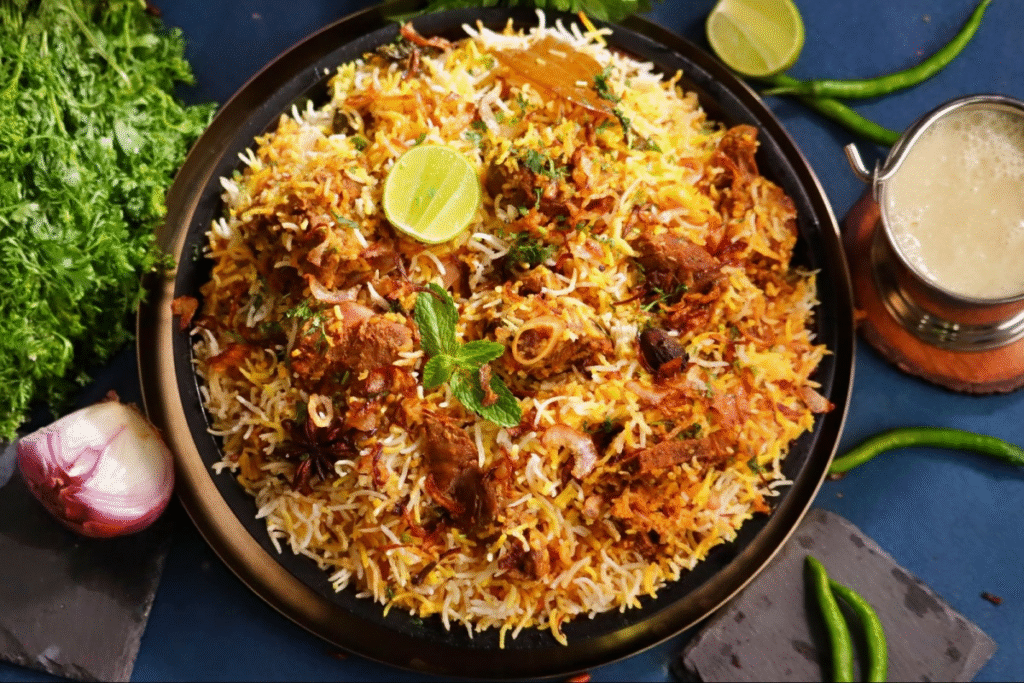
Welcome to our…LotusKing
Royal Biryani
About
us:
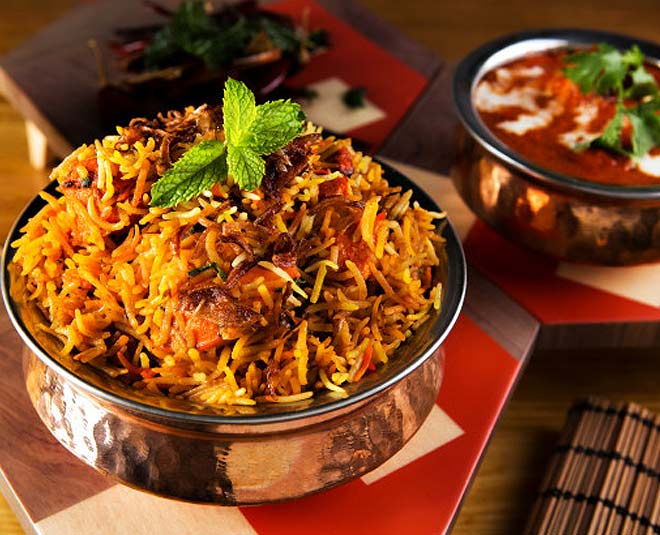
Biryani is a fragrant, spiced, rice-based dish popular throughout South Asia, consisting of layers of marinated meat (or vegetables), rice, and spices, slow-cooked together in a sealed pot using the dum pukht (slow steaming) method. Originating from Persia, it gained popularity in India during the Mughal era and has since diversified into countless regional variations across India, Pakistan, and beyond. Its rich, complex flavors, achieved with aromatic spices like cumin, cardamom, and saffron, make it a treasured and sometimes celebratory meal, often served with raita or salad.
Since 2004
LotusKing
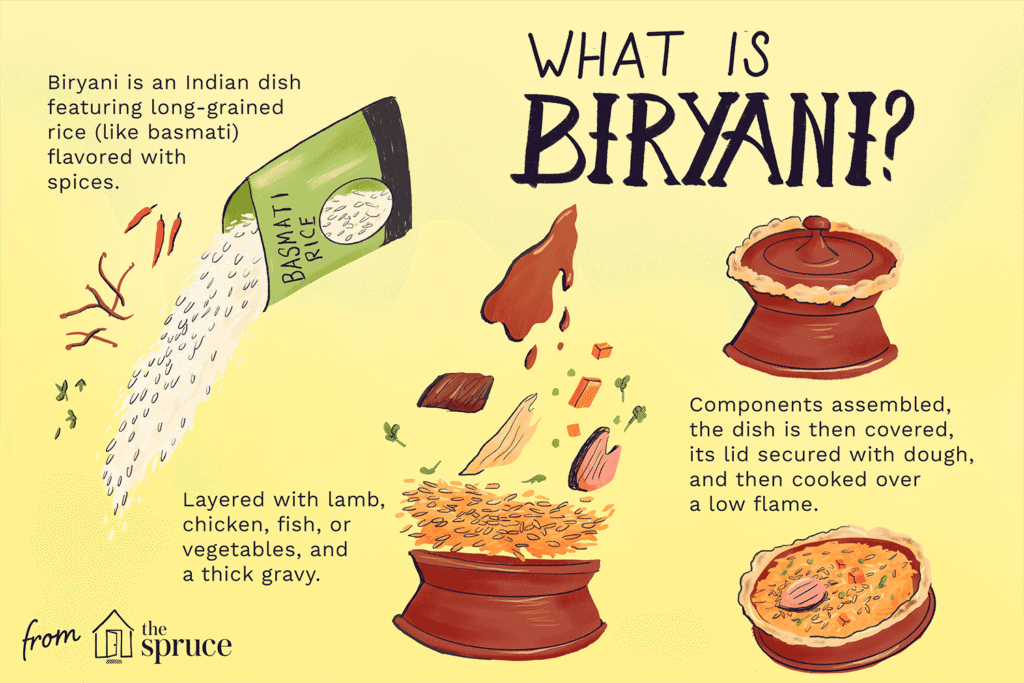
A world-renowned Indian dish, biryani takes time and practice to make but is worth every bit of the effort. Long-grained rice (like basmati) flavored with fragrant spices such as saffron and layered with lamb, chicken, fish, or vegetables and a thick gravy. The dish is then covered, its lid secured with dough, and then the biryani is cooked over a low flame. This is definitely a special occasion dish.
There is much debate of how this dish came to be, but most agree that its origins began in Persia as a rustic rice-and-meat dish and then traveled to India. The various recipes of biryani were then born, mainly where there was culinary influence from Muslim foods, particularly in the city of Hyderabad in south India, but also along the southern coast. Biryani’s many, many variations depend on where the dish is based. Some differences are subtle while others are distinguished by added or substituted ingredients.
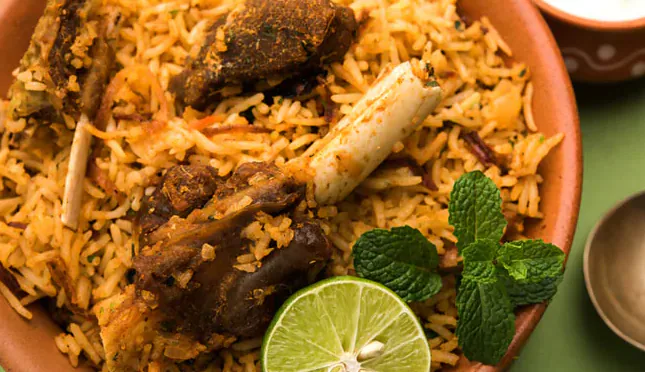
Hyderabadi biryani (also known as Hyderabadi dum biryani) is a style of biryani originating from Hyderabad, India made with basmati rice and meat (mostly goat meat). Originating in the kitchens of the Nizam of Hyderabad, it combines elements of Hyderabadi and Mughlai cuisines. Hyderabad biryani is a key dish in Hyderabadi cuisine and it is so famous that the dish is considered synonymous with the city of Hyderabad. The exact origin of the dish is uncertain. Despite legends attributing it to the Nizam’s chef, the biryani is of South Indian origin, derived from pilaf varieties brought to South Asia by Arab traders. Pulao may have been an army dish in medieval India. Armies would prepare a one-pot dish of rice with whichever meat was available. The distinction between “pulao” and “biryani” is arbitrary.[9][10] Hyderabadi biryani incorporated Deccani or Telangana flavors of, perhaps in the Nizam’s kitchen.